“Smile, guys. I’ll send this picture to my mom,” says the teenager, instinctively raising his phone, camera app already open, finger poised to tap the shutter for that 0.5 capture.
But what was supposed to be a simple commemorative photo to notify parents about a student’s whereabouts during a community engagement activity quickly turned into a modern-day dilemma: “There’s no WiFi here. My data’s not working. There’s no signal. How do I send this?!”
While technology has made life more convenient, it has also created a profound dependency. In its absence, people, especially the youth, easily feel disoriented. It’s almost like an essential limb has been temporarily severed. After all, it’s our phones we clutch last before sleep and search for first thing in the morning. So, imagine the dismay when connectivity is suddenly cut off, especially among digital natives who grew up online.
Despite the repeated promises of public leaders—many of whom claim to be champions of connectivity, offering differing versions of the proverbial “WiFi Man”—there are still countless places within cities, not to mention rural communities, where phone signals are weak and internet connectivity remains a luxury.

It was on a Saturday when the activity took place. I had the opportunity to join a community immersion organized by a private school aiming to develop students’ social consciousness. This experiential learning was meant to deepen their understanding of society’s realities and strengthen their attitude toward community development. In this particular case, the immersion brought us to a farming community in Tungkay, Toledo.
To strengthen lessons taught within the four walls of the classroom, students were introduced to real-life applications: preparing planting plots, watering crops, harvesting produce, and interacting with the farmers—activities that were meant to allow them to engage and somehow get them to experience what it means to be a farmer. Through interaction and immersion, the students were guided to become more knowledgeable and capable of addressing pressing societal needs (hopefully). Expected outputs from the activity included community needs assessments, policy proposals, and ideas for potential business partnerships based on the data gathered.
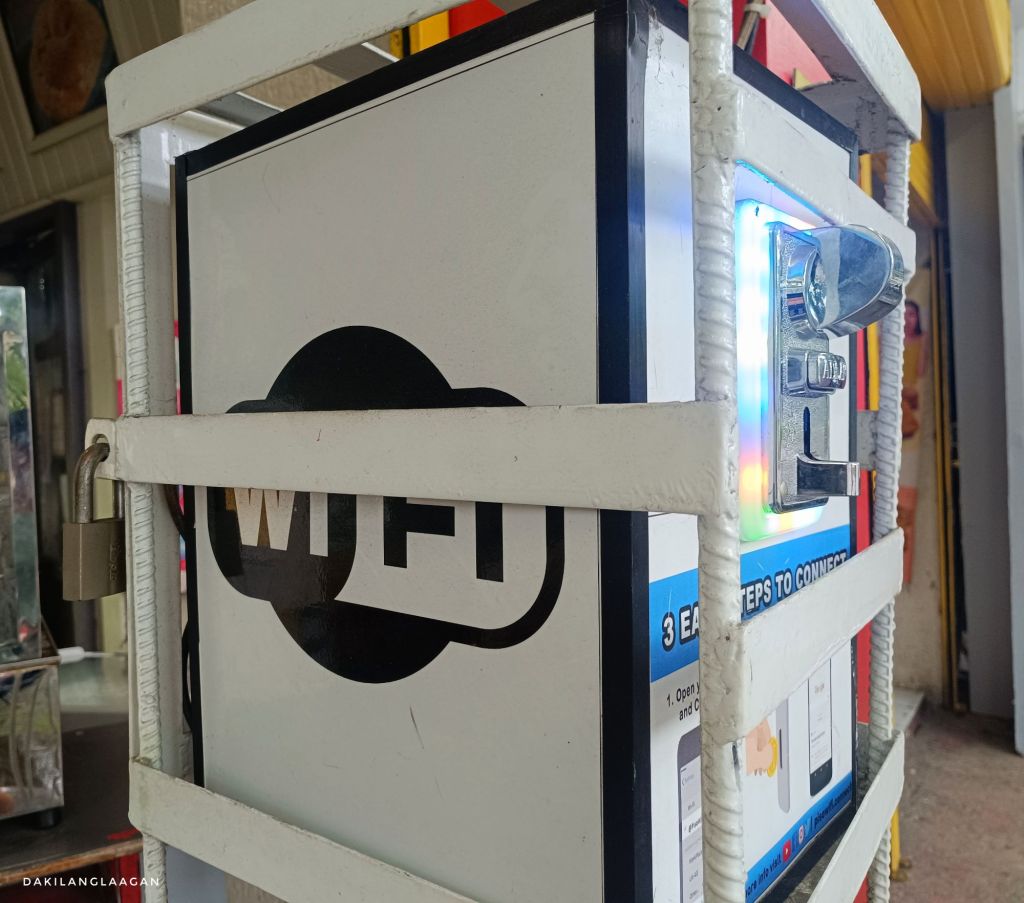
Raised almost entirely in urban areas, many of the students in the first batch were understandably overwhelmed by the simplicity of the modest barangay gym that also served as a basketball court, an extension of the chapel, and occasionally a parking lot. Their first instinct? Search for a signal. With no bars and no mobile data, they were left to explore the area, hoping to stumble upon something that could bring them back online. And they did. In the form of a blinking box with a coin slot labeled PISO WIFI.
While waiting for the second batch to arrive, the students gathered around the machine, meticulously following the instructions. Their excitement was contagious. Even though the internet was slow, it was enough. Enough to send updates to their parents. Enough to post stories. Enough to discover that the second batch had been delayed due to a vehicle issue—something to do with the engine. Coincidentally, the other group was also able to send updates as well of their current situation thanks to, yes, you’ve guessed it right, the PISO WIFI that they were able to connect with.
The Curious Case of the Piso WiFi
Filipino ingenuity is truly astounding. There’s always a way, an alternative, a workaround, to adapt to whatever limitations we face. In this case, the Piso WiFi system represents the Filipino spirit of innovation amidst adversity.
With most essential transactions now happening online—from education to business and government services—the lack of a strong internet infrastructure can severely restrict access to information and opportunities. Hybrid learning models require constant internet access. Students in remote areas often fall behind due to poor connectivity or a lack thereof. Entrepreneurs trying to grow their business online need consistent service to reach customers, market products, or access e-commerce platforms.

For communities reliant on agriculture, like in Tungkay, access to the internet has also offered countless benefits. Farmers use it to learn about seasonal trends, forecast prices, communicate quickly with fellow farmers, connect with agricultural organizations, and navigate complex government services. Interestingly, some farmers have even found an entirely new stream of income through content creation. As online viewers become increasingly curious about agricultural life, educational content about farming has found a niche audience. Some farmers document their daily routines, share tips, or explain the challenges they face, resonating with both urban audiences and fellow farmers alike. This challenges old notions of who farmers are and redefines farming as both a livelihood and a knowledge-based, tech-integrated vocation.
Piso WiFi, in itself, is a compelling business model. For just one peso, users can access the internet for 15 minutes. Instead of paying for a monthly plan, users only pay for what they need—reflecting the larger tingi culture in the Philippines. While this may seem inefficient from a macroeconomic perspective, it is a survival mechanism for those whose purchasing power is limited. It’s not ideal, but it’s real. And it’s working. For now.
Yet, as Nick Joaquin pointed out in The Heritage of Smallness, while this resourcefulness is admirable, it also highlights deeper systemic issues. These stopgap solutions shouldn’t be the end goal. Rather, these should spark conversations about long-term strategies and sustainable infrastructure.
In our conversations with the farmers, we heard stories that rarely make headlines—stories behind the food on our plates. Stories of backbreaking labor with little to no return. The revelation of why ‘Magtanim ay ‘di biro.’

Farming is a gamble: uncontrollable weather conditions, flooding, pests, oversupply, or inflation can all wipe out potential profit. And imported goods continue to threaten local produce. For many farmers, income must stretch to cover seeds, fertilizers, transportation, children’s school expenses, increasing needs of the family, and, as well as technological tools. Like people thriving in the city, they too employ adaptive measures because they must. But this shouldn’t always have to be this hard.
Piso WiFi as a First Step Toward Sustainable Connectivity

Just like the students who found unexpected joy in the connectivity offered by Piso WiFi, I too have experienced its benefits, particularly during major climbs in remote locations like Mt. Nangtud in Antique, and more recently, during trail running events.
As a content creator, staying online is not merely a convenience. It is part of the job. Timely updates, audience engagement, and relevance all depend on being connected. But in places where mobile signals are weak or nonexistent, Piso WiFi becomes a literal lifeline. Like literally.

During one trail running event, for instance, one of the aid stations where I volunteered was located in a far-flung area of the city where mobile signal was nearly impossible to find. As an intermediate cutoff station for the long-distance category, having reliable communication between the race director, organizers, marshals, and medics was absolutely crucial—especially for last-minute announcements, emergency calls requiring immediate medical attention, and real-time coordination of runners. In such a case, the Piso WiFi available at a nearby sari-sari store became an unexpected but vital support system.

Still, while Piso WiFi provides temporary relief, it’s far from a complete solution. It’s a reminder that we need a broader, more inclusive approach to connectivity. One that uplifts marginalized communities, enhances education, supports local businesses, and facilitates access to essential services.
Imagine schools in rural barangays fully equipped with stable internet. Imagine farmers receiving real-time data on weather forecasts, pest control, or price fluctuations. Imagine rural health centers using telemedicine to consult specialists in the city. Imagine indigenous groups preserving their culture and history by documenting and sharing it online. These are not far-off dreams. They are possible. But they require more than just one-peso internet connections. They require investment, vision, and a collective will to build sustainable systems.

Piso WiFi is a symbol of innovation, but it should not become a crutch. It’s a reminder of our creative adaptability but also of our pressing need for change. We can celebrate the brilliance of this system while also pushing for solutions that go beyond piecemeal fixes.
We should aim for a Philippines where technological advancement is not limited to urban centers but spreads equitably across all communities. Where connectivity is not a privilege but a right. Where students no longer have to climb rooftops or walk kilometers to submit homework. Where a farmer doesn’t need to rely on slow Piso WiFi to connect with the organization or navigate complex government processes.

The value of Piso WiFi goes beyond the internet connection it provides. It represents a collective yearning to be seen, heard, informed, and connected. But we need more. We need sustainable, long-term solutions that empower, not just temporarily accommodate.
It is time to challenge the status quo and imagine a society where growth is not limited to urban economies but is shared. Where farmers, the backbone of our economy, are no longer sidelined. Where every child, regardless of geography, has equal access to quality education and resources.
So, the next time a student sends a photo to their parents through Piso WiFi, let it not just be a signal of location and safety. Let it be a signal of progress, of a country moving forward together. Because yes, Piso WiFi is a bridge. But we owe our local communities more than a bridge. We owe them a highway to opportunity.
 Dakilanglaagan