
Several minutes after it was posted on Facebook, CCTV footage showing an SUV running over a man and leaving him dead went viral. The video drew thousands of furious reactions from viewers, many expressing outrage at both the brutality of the act and the seeming impunity behind it. Just a week earlier, a woman shared her experience of harassment while riding with a habal-habal driver. Her post quickly gained traction and eventually led to the driver’s immediate dismissal.
The other day, while riding a jeepney, I overheard an elderly couple lamenting how difficult it has become to visit their children and grandchildren late at night, given the rising reports of questionable arrests and encounters with authorities under the government’s aggressive anti-drug campaign.
These incidents represent only a small fraction of the crimes and social anxieties we see reported daily—alongside natural disasters such as Typhoon Ompong in Luzon and the deadly landslide in Naga City, Cebu. And then one begins to wonder: how many more cases, crimes, or tragedies never reach mainstream media or the ever-watchful space of social networking sites?
As someone constantly on the move, eager to explore more places across the country, I cannot help but ask: is the Philippines still safe for travelers?


These days, we seem to be in urgent need of an answer to the seemingly unending crimes committed in every corner of the country. The question that lingers is unsettling: is Martial Law really the solution? History tells us that such a measure has been tried before, and the consequences—both positive and negative—continue to shape public memory.
What follows are snippets of stories and accounts I have gathered, each offering insights into the perceived advantages and dangers of Martial Law as implemented decades ago. Some narratives highlight how order and discipline were restored in certain areas, while others reveal how civil liberties were curtailed, dissent silenced, and abuses of power allowed to thrive unchecked.
I do not claim allegiance to any political group, nor do I intend to dictate what others should believe. But refusing to take sides does not mean one should remain blind to the realities of the present. In a society where politics often resembles a grand show business—carefully staged, with many truths concealed behind curtains—it becomes even more crucial for ordinary citizens to ask hard questions and confront uncomfortable possibilities.
Ultimately, it is up to you to decide which perspective to take. The challenge is not merely about choosing a side, but about discerning how much of what we are told reflects the whole truth, and how much is deliberately left unsaid.

1. It strengthened family ties. [The boy who fell from the sky.]
On the morning of May 31, 1977, residents of Antipolo—a mountainous municipality just east of Manila—noticed a military helicopter circling low over a deserted stretch of land. Minutes later, something was hurled from the aircraft, crashing onto the rocks below. As the helicopter rattled away, curious onlookers rushed to the site. What they found was harrowing: the battered corpse of a young man.
The boy’s head had been brutally bashed, his body bearing burn marks and dark bruises that spoke of prolonged torture. An examining doctor would later count 33 shallow wounds on his torso, believed to have been carved with an ice pick. The victim was just sixteen years old—Luis Manuel “Boyet” Mijares, son of Primitivo Mijares.
Primitivo was no ordinary figure. Once a trusted aide of Ferdinand Marcos, he had defected and later exposed the inner workings of the dictatorship in his book The Conjugal Dictatorship of Ferdinand and Imelda Marcos. For his betrayal, he paid the price in exile and eventual disappearance. For his son Boyet, the price was even more horrifying—a brutal death meant as a chilling warning to those who dared oppose the regime.
2. It encouraged women empowerment. [The woman who vanished into the night.]
On March 24, 1983, in Davao City, Mindanao, 32-year-old Hilda Narciso was arrested while delivering a package to Volker Schmidt, a German pastor preparing to return to the Federal Republic of Germany. Narciso had recently arrived in Mindanao from Manila to work for a priest in Cotabato, who had entrusted her with the package—apparently containing an application for a grant—to be mailed abroad. Along with three others, including Schmidt himself, Narciso was detained.
She was blindfolded, handcuffed, and brought to a so-called “safehouse,” where she was accused of being a member of the Communist Party and threatened with “salvaging” (a euphemism for summary execution). Narciso denied the accusations, maintaining that she was engaged in church work and had come to Mindanao to help organize Basic Christian Communities.
While in captivity, still blindfolded, she was raped by their commanding officer and subjected to repeated sexual abuse by other soldiers during interrogations. Later transferred to Camp Catitipan in Davao City, Narciso was eventually allowed to meet with lawyers, to whom she disclosed the sexual assaults. She requested a medical examination in May—two months after her arrest—but was told there was no longer physical evidence of rape. She insisted she could identify her primary attacker by his voice and requested the chance to do so, but military officials denied this.
Decades later, her case remains unresolved, suspended indefinitely in the military courts. Narciso’s story reflects not only the systematic use of torture and sexual violence during the Marcos regime, but also the deep culture of impunity that shielded perpetrators from accountability.
3. It was instrumental in addressing issues of criminality, lawlessness, and smuggling.
In his inaugural speech in 1965, Ferdinand Marcos pledged to fight criminality, lawlessness, and smuggling. To fulfill this promise, he announced plans to expand the military’s budget, increase its personnel, and implement sweeping organizational reforms. At face value, the speech reassured a public anxious about peace and order. Yet beneath the rhetoric lay a calculated strategy: these measures were designed not merely to address lawlessness, but to consolidate Marcos’s personal control over the Armed Forces.
What many Filipinos failed to realize was that in applauding these reforms, they were effectively cheering on the forging of the first links in a chain of steel that would later bind them. Marcos’s Proposal No. 1—a “more vigorous implementation of the National Defense Act”—allowed him to enlarge the Armed Forces through conscription. Officially, the aim was to confront the Communist insurgency and Muslim separatist movements. In practice, however, the expansion created a loyal and increasingly politicized military force tailored to serve the president’s agenda.
The numbers tell the story starkly. In 1965, the Armed Forces of the Philippines numbered just 51,500. By 1975, that figure had nearly doubled to 101,900. A decade later, on the eve of Marcos’s downfall in 1986, the military had swollen to 165,000. Such rapid militarization was unprecedented in Philippine history.
Ethnic and regional loyalties further reinforced Marcos’s grip. The military had long been dominated by Ilocanos, Marcos’s own kin and regional base of support. As pro-Marcos senator Rodulfo Guanzon joked in 1965: “40 percent of the Armed Forces personnel are genuinely Ilocano; 20 percent are semi-Ilocano; and the rest are diehard Ferdinand Marcos supporters.” The quip captured a reality: Marcos strategically elevated Ilocano officers to key command posts, ensuring that loyalty to him was embedded deep within the institution.
Bypassing traditional chains of command, Marcos often dealt directly with field commanders, cutting out senior officers and even his own Defense Secretary. To the public, he portrayed soldiers not only as enforcers of order but also as agents of development. Troops were deployed to build infrastructure—constructing 33,359 kilometers of gravel roads, 210 kilometers of feeder roads, eight major bridges, and 52 irrigation projects. While these projects symbolized progress, they also normalized the presence of uniformed men in everyday civilian life, quietly blurring the line between development work and military control.
4. It reinforced the strict enforcement of the law.
As a lawyer, Ferdinand Marcos understood the importance of cloaking his actions in legality—or at least in the semblance of it. By serving two presidential terms, he was able to appoint the majority of justices to the Supreme Court. By the time he declared Martial Law in 1972, eight of the 11 sitting justices were his appointees. Yet even before Marcos had stacked the Court with his allies, the judiciary had long displayed deference toward executive authority—an inclination the President would exploit with remarkable skill.
A pivotal moment came on August 21, 1971, when two grenades exploded at a political rally in Plaza Miranda, killing nine and wounding 95. Marcos seized on the tragedy as justification to suspend the privilege of the writ of habeas corpus, allowing the warrantless arrest of dozens of political opponents and alleged conspirators. This move, abrupt and sweeping, was a dress rehearsal for Martial Law.
When the constitutionality of the suspension was challenged, the Supreme Court sided with the President. By doing so, it not only legitimized the arrests but also signaled its willingness to acquiesce to the executive’s broad claims of emergency power. In effect, the Court set a precedent: when fear and crisis could be invoked, constitutional safeguards could be bent—if not broken—under the weight of presidential authority.
5. It addressed lapses in a democratic country.
The violent rallies and demonstrations against the Marcos government dovetailed neatly with the president’s broader plan to portray the Philippines as a nation on the brink of collapse—one that supposedly required a strong, despotic hand to fend off the Communist threat. On February 21, 1970, Marcos confided in his diary: “a little more destruction and vandalism and I can do anything.” A year later, on March 5, 1971, he wrote again: “… there must be a massive destruction and sabotage before I do this (Martial Law). I keep repeating this to myself.”
Far from waiting for circumstances to justify his designs, Marcos actively helped engineer them. He deployed psy-war specialists and provocateurs across Manila to incite violence during demonstrations and plant bombs—acts he then blamed on Communists, particularly the fledgling New People’s Army (NPA). Evidence, however, pointed back to his own regime. A remorseful Constabulary sergeant later confessed to planting a time bomb in a department store “on superior orders.”
Senator Benigno “Ninoy” Aquino Jr. was preparing to expose the truth—that a special military unit was behind the wave of bombings—when Martial Law was abruptly declared. Supporting this claim, historian Alfred McCoy cites testimony that General Ramon Cannu, a deputy of General Fabian Ver in the Presidential Security Unit, had “organized some of the bombings that were done to convince people that there was a crisis and democracy was not working.”
6. It protected the country from leftist rebellion.
Marcos regularly warned his National Security Council about the threat of Communist rebellion. Strangely, despite his repeated alarms and the sweeping military reforms he implemented, the so-called Communist menace appeared only to grow stronger each year—or at least that was the official narrative.
Yet insiders painted a different picture. A former intelligence officer, who once worked under General Fabian Ver, later admitted that “even when Martial Law was declared the Communists were not a real threat. The military could handle them.” He acknowledged that the number of armed rebels was indeed increasing at the time, “but to me it was not really a threat.”
7. It addressed perennial problems related to health.
Globally, during the Marcos regime, the Philippines recorded some of the highest rates of preventable diseases: whooping cough, diphtheria, and rabies. Within the Western Pacific region, it topped the charts for tuberculosis and polio. Every day, an estimated 400 Filipino children died from diarrhea and other communicable diseases—conditions that could have been prevented with adequate medical care and public health infrastructure. Yet studies revealed a stark reality: seven out of ten Filipinos died without ever seeing a doctor.
The health system was grossly inadequate. In typical hospitals, the ratio of beds to patients was approximately 1:650, leaving many untreated or crammed into already overcrowded wards. In sharp contrast, the Marcoses maintained a private mini-hospital inside Malacañang Palace worth an estimated $250,000, symbolizing the vast gap between elite privilege and public neglect.
Imelda Marcos’s grand hospital projects—such as the Lung Center of the Philippines—were built to showcase modernity, but in practice they catered only to those who could afford their exorbitant fees. By 1986, the Lung Center reportedly had just a single patient, while institutions like the Quezon Institute still forced multiple tuberculosis patients to share beds.
Worse, international donations from organizations such as the World Health Organization (WHO) and UNICEF—intended for public health programs—were allegedly diverted. Funds were traced to Imelda Marcos’s London account, used to purchase diamonds, and to then-Minister of Health Florentino Solon, who allegedly spent the money on multiple properties across the country, including a beach resort.
8. It facilitated the establishment of protected habitats for wildlife.
In 1963, an estimated 105,000 informal settlers lived in Metro Manila. By 1975—just three years after the declaration of Martial Law—that number had doubled to roughly 200,000. Conservative figures suggest that by this time, one in five Filipinos living in urban areas lacked access to decent housing. Many of these slum dwellers were displaced from areas earmarked for hotels and infrastructure projects awarded to Marcos’s cronies, forcing the poor into increasingly crowded and unsanitary communities.
The poverty of these conditions stood in stark contrast to the opulence of the Marcos family. Across the globe, the Marcoses maintained dozens of residences valued in the millions, each requiring costly upkeep. By 1985, the annual maintenance of their various homes was estimated to equal the amount needed to feed a small town of 48,000 people for an entire year.
Perhaps one of the most disturbing examples of extravagance was the case of Calauit Island, located 275 miles southwest of Manila. Around 120 impoverished families were forcibly evicted from the island to make way for giraffes, zebras, gazelles, and other African wildlife imported from Kenya. Acquired through government funds and maintained at approximately $30,000 per month, Calauit became a private safari and hunting reserve—reportedly frequented by Ferdinand “Bongbong” Marcos Jr.
9. It helped generate additional income for Filipinos.
Antonio Floirendo, a close business associate of the Marcoses, was one of Ferdinand’s most generous backers. His loyalty was rewarded with proximity to power: he became a fixture in Imelda Marcos’s entourage and a leading contributor to her high-profile projects. In return, Floirendo was granted control over one of the world’s largest banana plantations, seizing vast tracts of land and displacing indigenous communities in the process.
With Marcos’s support, Floirendo struck a controversial partnership with the Bureau of Prisons, securing access to prisoners as a source of cheap labor for his plantations. This arrangement allowed him to expand his empire with minimal costs, but at devastating human expense. Prisoners were roused at 3 a.m., forced to work overtime, and subjected to backbreaking labor that often left them with permanently deformed spines. Exposure to harsh chemicals left many sick or injured, yet they were given neither job security nor health care.
The cruelty of this system was underscored by the grotesque irony of how bananas were treated with greater care than the workers who cultivated them. Fruits destined for export were stored with cushions and refrigeration to ensure quality, while laborers were left unprotected and expendable. Workers were forbidden even to eat the bananas, regardless of quality. Instead, surplus fruit was fed to specially bred cattle—whose meat was reserved exclusively for the Marcoses and their circle of cronies.
10. It provided meaningful support to local farmers.
Marcos appointed Juan Ponce Enrile to a series of powerful government posts, including chairmanship of the Philippine National Bank, the National Investment and Development Corporation, the Philippine Coconut Authority, and United Coconut Mills. Among Enrile’s most notorious ventures, however, was his central role in the coco levy fund scam—widely regarded as one of the largest corruption schemes of the Martial Law era.
The coco levy was introduced as a tax on coconut farmers, initially set at $0.08 per 100 kilos of copra. Officially, it was intended to fund programs under the Coconut Investment Company, Cocofed, and the Philippine Coconut Authority, with promises of development and support for the country’s coconut industry. But under Martial Law, the levy skyrocketed to $13 per 100 kilos, swallowing nearly 34 percent of farmers’ already meager incomes. At the time, most coconut farmers could afford only about 10 percent of the minimum daily food requirements for their families.
In total, the levy raised an estimated $475 million. Instead of benefiting farmers, however, the funds were diverted to finance Enrile’s sprawling business interests and to bankroll Imelda Marcos’s vanity projects, including the Miss Universe pageant and the Cultural Center of the Philippines.
Enrile was not alone. Eduardo “Danding” Cojuangco, another Marcos crony, also profited immensely from the levy. He used the funds to consolidate control over the sugar and flour industries, and most significantly, to acquire majority shares in San Miguel Corporation—one of the country’s largest and most profitable conglomerates.
11. It recognized and provided support for the diverse ethnic tribes of the Philippines.
Manuel Elizalde, Marcos’s cabinet minister in charge of ethnic affairs, headed the Presidential Assistance on National Minorities (PANAMIN). In the 1970s, Elizalde announced to the world the “discovery” of the Tasaday, a supposed Stone Age tribe living in isolation in the forests of Mindanao. Marketed as a people untouched by modern civilization, the Tasaday quickly captured the imagination of scientists, journalists, and tourists alike.
For a time, the Marcos government basked in the international attention, using the Tasaday narrative as proof of the Philippines’ cultural richness and as a distraction from mounting political unrest at home. The tribe became a symbol of “exotic authenticity,” a convenient showcase for state propaganda.
But years later, the story unraveled. While the Tasaday were indeed part of a recognized indigenous group, the spectacle was largely staged. Elizalde had allegedly coached and rehearsed them to appear as primitive cave dwellers, fabricating a Stone Age image that would be more profitable both for tourism and for the regime’s international reputation.
12. It marked the beginning of the Build, Build, Build infrastructure initiative.
Rodolfo Cuenca, one of Marcos’s most trusted cronies, not only campaigned and raised funds for him but also became the regime’s favored contractor. In return, Cuenca was granted lucrative projects that produced some of the Marcos government’s most well-known infrastructure—projects that often served private rather than public interests.
Through his company, the Construction and Development Corporation of the Philippines (CDCP), Cuenca built the Manila North and South Expressways. CDCP quickly became the regime’s go-to firm, regularly commissioned for projects, many of them unnecessary or extravagant, particularly those championed by Imelda Marcos. Among these was the San Juanico Bridge, linking Leyte and Samar. At the time, there was little economic traffic between the two underdeveloped islands; the project’s primary purpose was to fulfill Imelda’s vanity for her home province. Cuenca, however, benefited greatly from the inflated contracts, securing kickbacks and cementing his favor with the First Lady.
Cuenca’s ventures extended beyond bridges and highways. Ignoring environmental warnings, he spearheaded land reclamation projects around Manila Bay, profiting by selling the “new land” at inflated prices. When proposing the budget for what would eventually become the Light Rail Transit (LRT) system, costs were bloated to $278 million, despite original estimates of only $8.1 million. Meanwhile, motorists bore the burden of additional toll fees imposed on the Manila–Alabang highways, further enriching Cuenca.
Perhaps the most infamous project tied to this era was the Bataan Nuclear Power Plant (BNPP), touted as the regime’s answer to the 1973 oil crisis. It was projected to save six million barrels of crude oil annually and address the country’s chronic power shortages. However, corruption and mismanagement plagued the project. The initial Westinghouse bid of $500 million ballooned to $1.1 billion—for a single reactor. Following the 1979 Three Mile Island nuclear accident, construction was halted amid revelations of serious safety flaws in the BNPP. When the Aquino administration finally shut it down, the plant became the most expensive white elephant in Philippine history. To this day, it remains unused, maintained at a staggering cost of $50 million annually, serving only as a tourist curiosity.
13. It placed significant emphasis on the promotion of culture and the arts.
The development of the Cultural Center of the Philippines (CCP) complex reflected the Marcos administration’s emphasis on cultivating “the Filipino soul” through grand cultural projects. Guided by architect Leandro Locsin, the CCP rose on reclaimed land from Manila Bay and housed works by some of the nation’s leading artists, including Hernando Ocampo, Fernando Zóbel, Arturo Luz, Cesar Legaspi, and Vicente Manansala. While celebrated as a symbol of modern Filipino artistry, the complex came at a steep financial cost. Its construction drew heavily on the Cultural Development Fund—composed of donations from Imelda Marcos’s fundraising campaigns—as well as loans from the World Bank and the International Monetary Fund, draining resources that might otherwise have supported urgent social needs.
Eager to further cement Manila’s reputation as a cultural capital, Imelda launched an even more ambitious venture: the Manila Film Center. Conceived as a “Parthenon of Philippine cinema” and envisioned to rival Cannes, the project was rushed to completion for the first Manila International Film Festival, scheduled for January 18, 1982. With an estimated cost of $25 million, construction demanded around 7,000 workers laboring in round-the-clock shifts to meet Imelda’s three-month deadline. The building was officially completed just 15 minutes before the opening ceremonies.
But the Manila Film Center made global headlines not for its grandeur, but for the tragedy that accompanied its construction. At 3:00 a.m. on November 17, 1981, a section of the roof collapsed, burying an alleged 169 workers beneath wet cement. Some were completely entombed, while others were trapped half-buried in the rubble. Rescue operations were delayed for nine agonizing hours until an official statement was issued; in the meantime, ambulances were barred from the site. Construction, astonishingly, continued even as victims remained entombed beneath the concrete—sacrificed to meet Imelda’s deadline.
The festival itself failed to live up to expectations. Though Imelda projected an audience of 4,500 international celebrities and revenues of $52 million, many stars declined her invitation. Instead of prestige, the center was left with debt. The opening night and subsequent operating costs ballooned to $4 million—expenses ultimately shouldered by the Central Bank, deepening the country’s financial woes.
I have written many horror stories, but I guess Shakespeare was right—reality can be far more tragic than fiction. Revisiting our nation’s history feels like watching a historical K-drama, where royal families conspire and assassinate to seize power. The only difference is that, unlike the K-dramas I’ve come to love, the Philippine tragedy has no neat ending. It is an unfinished tale, an ellipsis dangling without closure.
We have not learned from the past. Instead of rowing together, we turn on one another. We point accusing fingers at the government while forgetting to ask if we ourselves have done the simple, responsible things to move the country forward. And as long as we remain blind, deaf, and indifferent to the needs of others—our communities, our environment, our nation—we are doomed to repeat the same dark chapters of our history.
“At kung sakaling ang mga mata’y mabukas, naway ang mga ito’y hindi na muling pipikit.”
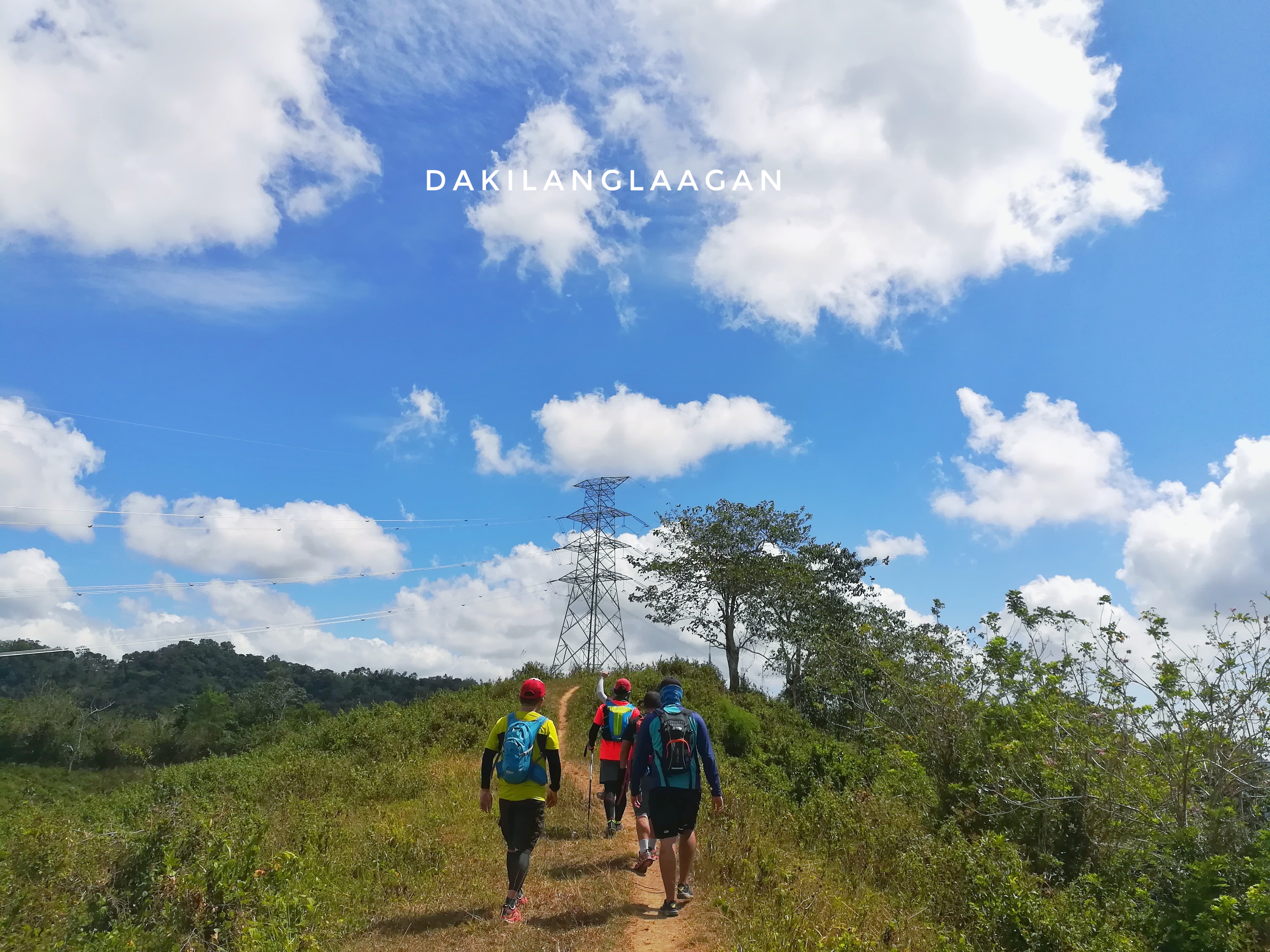
PS. Yes, these are the kinds of conversations we have while hiking. Come join us on the trails!
Referenes:
Cortez, L. S., Dela Cruz, R., Manese, M. A., Mayor, D. C., & Nevada, V. T. (1986). Truth unspoken: An interview with Ms. Hilda Narciso. De La Salle University.
David, A. (2000). Seven in the eye of history. Anvil Publishing.
Robles, R. (2016). Never again: The story of the martial law years. Filipinos for a Better Philippines.
Elemia, C. (2017, January 21). Coco levy fund scam: Gold for the corrupt, crumbs for farmers. Rappler.
Iten, O. (n.d.). Tasaday: The real story. Oswald Iten.
Robles, R. (2016, September 16). 44 years too long: The martial-law victims, ‘desaparecidos’ and the families left behind. BusinessMirror.
“Supreme Court: Coco levy public fund.” (2001, December 15). Philstar.com
 Dakilanglaagan