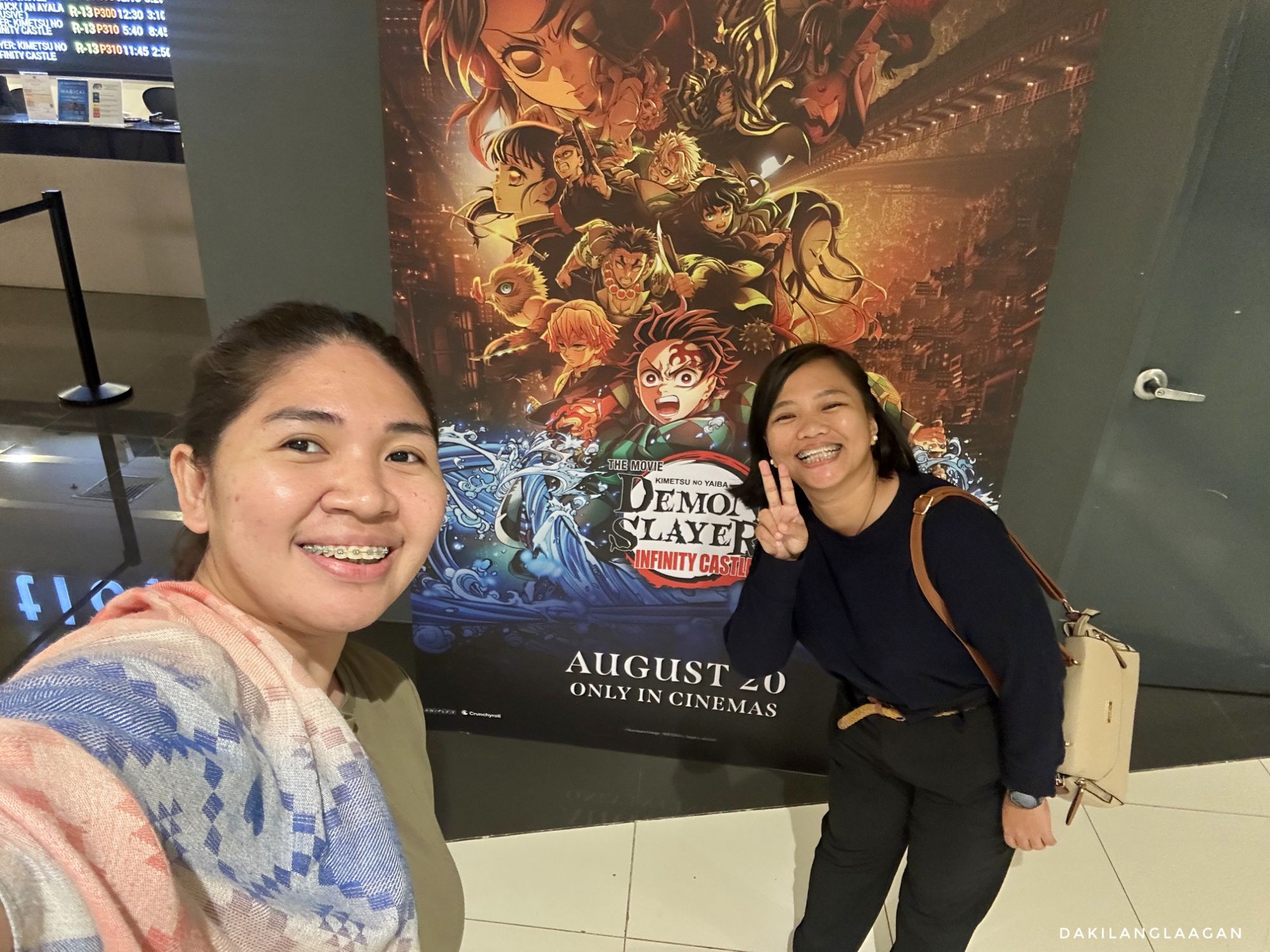
‘Wait, you watch that?!’
This statement often comes as no surprise. Come to think of it, at this age, with my professional background—and as a woman, nonetheless—it seems unusual to some that I’m still interested in anime, manga, and manhwa. Balancing a demanding work life and adult responsibilities with a love for ‘stereotypical Japanese cartoons’ makes people raise their eyebrows.
But that’s the thing: we tend to box things into shallow categories. Animated. For kids. For childish individuals who refuse to grow up. Huh.
But I’ve watched anime even before Barbie and Disney movies. I was immersed in the bloodshed of Rurouni Kenshin before I memorized Princess and the Pauper’s I Am a Girl Like You. I saw women fight alongside Saiyans and demons in Dragon Ball and Ghost Fighter before I fell in love with Mulan and Pocahontas. I cheered through Slam Dunk and Prince of Tennis before I realized I had a place on the softball field and volleyball court—beyond a closed room for Scrabble. And I traveled far and wide with Naruto and Luffy before climbing mountains, running trails, and exploring more than half the provinces of this country.
So yes, anime and I go a long way—and I don’t think that’s changing anytime soon, especially not now.
They say you should revisit your favorite books and films at different phases of your life, because your perspective changes each time. I think the same goes for anime. When I first watched Demon Slayer, I was still trying to recover from the havoc that Attack on Titan wrecked on me—the genius plot, the devastation each character carried (*Sasha, sobs). I thought Demon Slayer would be redemption. It turned out to be just as heartbreaking.
Never underestimate shōnen anime. They are more than just those brutal fight scenes or hilarious ‘fan service’. They are deeply emotional, often more dramatic than live-action series.
Personally, I left my heart in Mugen Train.
And it took me years to move on and continue with Demon Slayer. Rengoku’s death is still one of the most tragic anime losses for me—necessary for the story, yes, but unbearably painful all the same. Why do good people die so early? Insert the ‘masamang damo’ adage.

Why Demon Slayer Is Worth Watching
Beyond the plot of filial love, forged brotherhood, and the desperate fight for humanity’s survival, Demon Slayer is fast-paced. It doesn’t drag its story just to milk money from its audience.
The animation? Ah, totally breathtaking. The current film proves that ‘budget is budgeting.’ The story balances grief, vengeance, resilience, and human connection while mixing in moments of humor and even chibi-style breaks. Those lighter touches are like breaths of air between suffocating battles.
It’s truly a spectacle to watch, whether you’re there for the epic fights or the laughs in between.
But now, I find myself looking at it differently. Beneath the bloodshed and comedic breaks, there’s so much more to unpack. Beyond friendship, brotherhood, and familial love, the series mirrors how societies evolve, how humanity adapts to survive, and how leadership, trauma, and recognition shape who we become.

Of Servant Leadership
Prior to the Infinity Castle, the Hashira Training Arc laid the foundation for what the upcoming final battle would look like. And one of my most favorite parts wasn’t actually the training preparations of the leading characters, but rather the wisdom and leadership of Kagaya Ubuyashiki.
For someone so weak in body, with followers who were literally strong—though not immortal and not capable of the regeneration that demons possessed—the authority he established is something worth reflecting on. In a world that constantly clamors for an authoritarian leader, someone to solve problems on behalf of the helpless, a figurehead with an iron fist to control and instill fear, the 97th leader of the Demon Slayer Corps offered something profoundly different. His leadership was anchored on respect, understanding, love, the common good, and servant leadership—willing to sacrifice not for glory, but for the survival of many, for the hope of future generations.
It was a heroic kind of sacrifice, one that did not demand the loudest applause or grand displays of power but instead drew tears and respect from those who followed. It was a victory not owned by one man but shared by many, a legacy etched into the lives he touched, far beyond his short years.
This kind of leadership is something Muzan Kibutsuji, despite living for over a thousand years, could never comprehend. Muzan instilled fear and preyed on the vulnerable conditions of his followers. He never understood what it meant to be a leader whom people follow out of love, not fear. While he hid in the Infinity Castle—an ever-shifting fortress impossible to infiltrate—Kagaya Ubuyashiki lived unguarded with his family, even though the Hashira themselves volunteered to protect him.
This contrast reflects so much of the real world. Those who wield power in society are almost always heavily guarded by elite forces, even by state authorities. But if the true goal of leadership is to create a secure and peaceful society, then why the need for constant protection? What does it say about the kind of authority one wields if safety only exists behind guards and walls?
Here, Demon Slayer subtly presents why survival is often about the ‘fittest’ and not necessarily the ‘strongest.’ The fittest are those who adapt, who connect, who build genuine relationships, who assimilate with their environment instead of dominating it. Ubuyashiki exemplified this with the ability to guide through compassion, to thrive not through physical strength but through wisdom and humanity.
‘Of Unhealed Childhood Trauma’
Another aspect I love about Kagaya Ubuyashiki is how he treats everyone as his children, even though he himself died at the young age of 23. Despite being frail, despite not having the physical strength or combat skills that the other Demon Slayers possessed, his way of embracing everyone as family revealed a deep truth. Because if you actually look closely at the backstories of the many characters introduced in Demon Slayer, you can see one striking pattern: almost all of them are children who were forced to grow up too soon.
Even the demons.
They were orphans. They were abused. They were children robbed of the chance to simply be children and were forced instead into the weight of adult responsibilities. Some managed to remain kind and found purpose, guided by responsible adults who nurtured them. Others, however, strayed into darker paths, manipulated by Muzan and seduced by the promise of power, survival, or even belonging.
This is reflective of so many juvenile cases in our own society. When childhood trauma is not addressed, when it remains unprocessed, it becomes fertile ground for manipulation, exploitation, and further harm. Children who never receive guidance, care, or affirmation often grow into adults more prone to being consumed by cycles of pain and violence.
I remember one teenager once saying that one of the flaws of Marx’s theory is that it neglects free will—that by nature, greed runs through our veins. Yes, Marxism is often criticized for being deterministic, reducing human behavior to economic structures, and overlooking personal agency and moral decision-making. But on the other side, perhaps greed isn’t an innate human trait after all. Perhaps it is a product of the systems we live in—systems that thrive on competition, accumulation, inequality, and unequal access to resources.
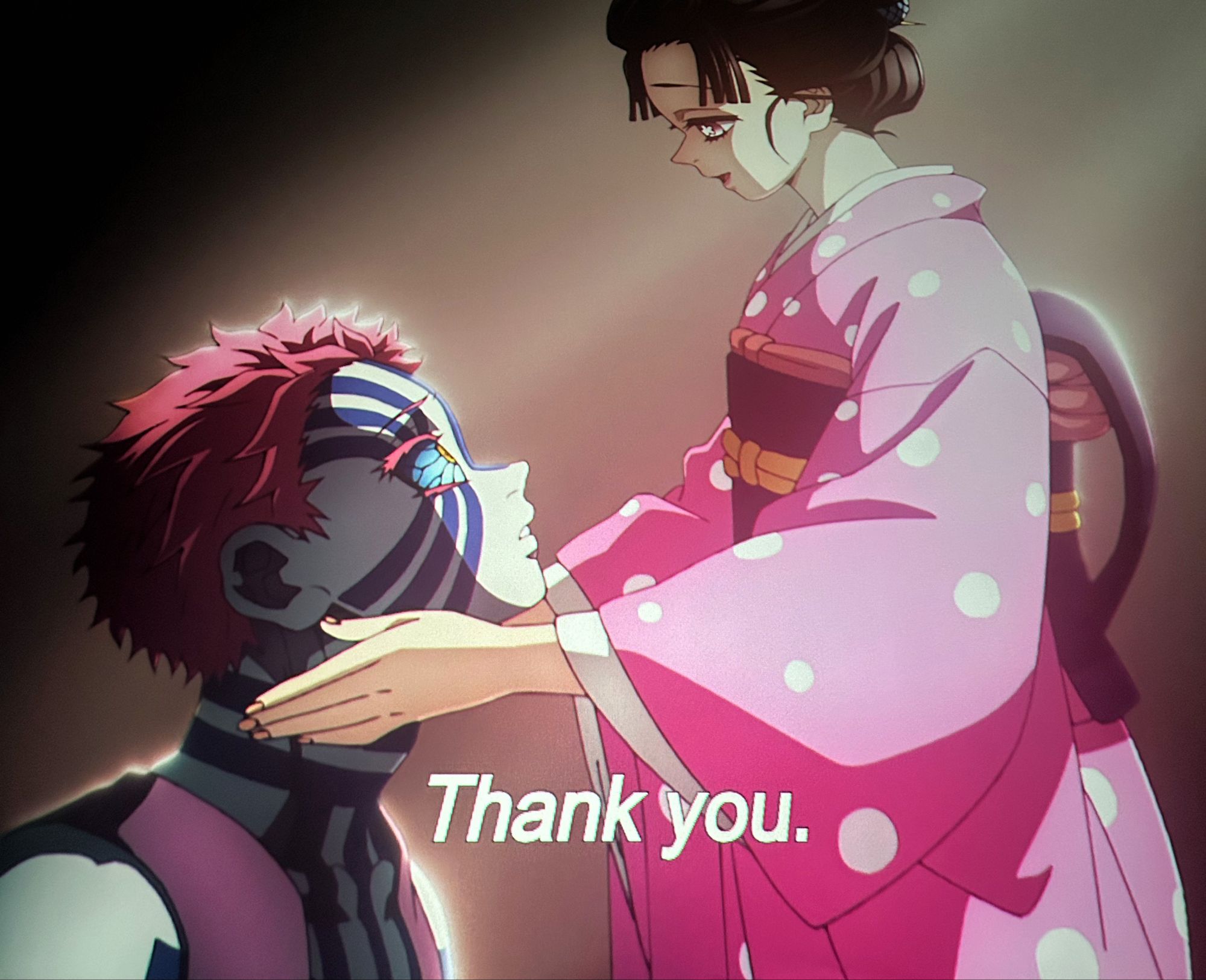
Take Akaza’s situation, for instance. His crimes, which included theft, violence, and killing, stemmed from desperation: stealing to buy medicine for his sick father. His will to be strong, his compulsion to fight, and even his eventual transformation into a demon can be read not simply as inherent evil, but as the tragic consequence of systemic inequality. His life, like many others, reflects how survival often comes at the cost of morality. At such a young age, he bore the responsibility of life and death. His descent into darkness wasn’t just his ‘choice’ alone. It was actually the outcome of a world that failed him.
And this is what makes anime like Demon Slayer so brilliant: it forces us to look at characters not just as villains or heroes, but as humans shaped by trauma, circumstance, and systems much larger than themselves, as explained through the lens of sociological imagination.
‘Of Humanizing Villains’
In one episode of Payaman Insider podcast, Burong, Boss Keng, and Junnie Boy once joked about how wrecked the children of the 90s would have been if Kiminobu Kogure’s three-point shot in Slam Dunk hadn’t landed after that week-long flashback sequence. (Imagine being suspended in that moment from Monday to Friday!) That’s the emotional manipulation anime is capable of: not just for entertainment, but in how it makes us feel.
And contrary to the stereotype that anime is only ‘funny cartoons,’ shows like Kimetsu no Yaiba reveal extraordinary emotional depth. Much like how Disney and other big studios have created films that reveal the backstories of villains (Maleficent, Cruella, Darth Vader, Joker, Scar), anime also offers us these narratives, except oftentimes, with far greater nuance and heartbreak. And in this case, Akaza’s backstory.
Scrolling through TikTok, you’ll actually find hundreds of posts of people crying over Akaza’s past. I mean, who wouldn’t? Personally, if I hadn’t already been wrecked in childhood by Kenshin Himura and Obito’s backstories—both almost parallel to Akaza’s—I’d probably be crying uncontrollably too.
And this is the reason why, for me, the Infinity Castle movie would have been more powerful if it were broken down into episodes instead of being packed into a film. Each backstory deserves its own space to breathe. To soak. To be felt. Dividing it into episodic arcs would have allowed us to fully honor each life, each tragedy, and each choice. But then again, I also understand the power of cinema. The fight sequences, the sound design, the sheer scale—it all demands to be experienced on the big screen. Sitting in the front row, I truly felt like I had fallen straight into the Infinity Castle myself.
By presenting these different points of view, the series forces us to grapple with the complexity of morality. It challenges our concepts of deviance and conformity, our notions of good versus evil. It asks: how evil is evil? When is forgiveness possible? What are the conditions under which someone deserves redemption?
By revealing vulnerabilities, the show doesn’t just make us sympathize with the villains; it also makes us recognize that even the darkest characters may be products of pain, distorted ideals, and broken systems. And in doing so, it confronts us with uncomfortable truths about ourselves and the world we inhabit.
As Akaza wrestled with his immortality, haunted by his past even as his demon self fought for dominance, I was reminded of Bob Ong’s words in Bakit Baligtad Magbasa ng Libro ang mga Pilipino? (2002): “Kaya siguro namigay ng konsensya ang Diyos, alam Niyang hindi sa lahat ng oras e gumagana ang utak ng tao.” (God gave us a conscience because sometimes, the human mind simply fails.)

‘Of Pride and Joy’
And in a world so centered on personal achievements and gratification, the hunger to rule over others like Muzan, or the obsession with becoming the strongest like Akaza, Demon Slayer reminds us that sometimes, all it takes is something simple. Recognition. Acknowledgment. The affirmation that we matter.
This is where Zenitsu’s epic fight scene unveils something beautiful. While much attention is given to Akaza’s heartbreaking backstory in the film, Zenitsu’s moment of glory reminds us that not all turning points are born of tragedy. Sometimes, they are born of words: gentle, affirming words that validate one’s existence.
As a closure to Zenitsu’s arc and everything else that was encapsulated in his backstory, his master, Jigoro Kuwajima, perfectly strung words that ignited the power within the cheeky boy we knew: “You are my source of pride and joy.” Simple words, yet powerful enough to alter the course of Zenitsu’s life. And doesn’t this go exactly with life?
Many of us carry invisible wounds not because we were denied opportunities, but because we were denied acknowledgment. Because the adults in our lives, the very people meant to nurture and guide, failed to affirm us. Failed to recognize our worth. Too many children grow up without hearing that they are someone’s pride and joy, and as a result, they spend their lives searching for external recognition—titles, wealth, achievements—just to feel seen.
‘Of Moving Forward to Sunrise Countdown Arc’
And while the Infinity Castle is just the first installment of a three-part finale, it has already given us so much. Tragedy. Hope. Sacrifice. A mirror held up to the darkest and brightest parts of humanity. And while countless lives have already been lost within its walls, and more are certain to be taken in the upcoming sequels (time to re-read the manga, huhu or haha?), one thing remains certain: good things come to those who persevere, even if the struggle takes centuries.
The legacy of the Ubuyashiki family lives on. And from a sociological perspective, it’s fascinating how this resonates with human society at large. Again and again, history shows us how society continues to evolve, striving to keep balance, to sustain life, to adapt to changing times. Humanity, no matter how cruel the world becomes, always finds a way to rise, to fight back, and to endure.
I once discussed this with my team head, and we reflected on an old saying: wala gyuy aso nga makumkom—evil will always rise to the surface. Eventually, people will recognize what is wrong in the system, what is broken in society, and someone, somewhere, will stand to fight against it. The world can be merciless, but history proves that hope refuses to die.
And that, I think, is the core intersection between Demon Slayer and our own reality. Years ago, I may have only understood the story at a surface level—just battles, deaths, victories, and personal epiphanies. But now, I see it as a reflection of our collective struggle: that even in a cruel world, light can be carried forward. That resilience is not just about strength, but about endurance, faith, and compassion.
Which makes me excited for what’s to come. How will the Sunrise Countdown Arc reveal itself? How will it break us, heal us, and challenge us to think differently again? And maybe, more playfully, who will I even be watching it with when it comes out?
So, yes, I still watch anime. And I don’t think that’s going to change anytime soon. Not with the final battle approaching, not with new reflections waiting to unfold. Because at the end of the day, life is short (like Shinobu, haha)—so why not spend it on things that make us happy, thoughtful, and alive?
 Dakilanglaagan